I won!
Pardon me for just blurting it out, but I couldn't help myself. I actually won first place in the Southwest Writer's Annual contest, in the category of nonficton essay!
Wow!
I am thrilled to the bone. Someone besides my family and friends thinks I can write well!
I could hardly believe it. But there it is, in print.
My first writing competition. I'm very happy.
Tuesday, September 19, 2006

Sunday, August 20, 2006
To Cut or Not to Cut?
This is a piece from 50 Ways to Leave Your 40's, the book I'm co-authoring. It's from a chapter entitled, "Love Thy Body."
“Love thy body,” we say. Well, what if you don’t? What if you, like many mid-lifers, look in the mirror and pine for days gone by and a body gone bye-bye? What if you don’t WANT those basset hound eyelids, that turtle neck or the sumo belly? And where the heck have your boobs slouched off to now?
“Hey, kiddo,” says the little voice. “You don’t have to look like this. It’s a new century! They’ve got ways to FIX you!”
It’s true. A nip here, a tuck there, a little suction and augmentation and voila! The new you. Why not? Why “love thy body” when you can just “fix thy body”?
You’d certainly be in good company. More and more Americans are pursuing their lost youth in operating rooms, to the delight of the cosmetic surgery industry, which raked in 9 billion dollars in doctors’ fees in 2005. In that year, almost two million people went under the knife for cosmetic purposes alone. This includes, by the way, a dizzying array of possible procedures, from the familiar Facelift and Tummy Tuck to the newer Butt Boost and Vaginal Rejuvenation. If you add to that the number that had “minimally invasive” procedures like Botox injections, laser hair removal and dermabrasion, the number skyrockets to over ten million men, women, boys and girls.
Why do we do this? Why subject ourselves to the risks of surgery, the likelihood of scarring, the chance of a blighted outcome, all for looks?
Clearly our society suffers from a nasty case of Youth Worship. Physical beauty is defined always in terms less than thirty years of age, and everywhere you go, big glossy ads scream "value equals looks!" But it seems to me that by midlife, most of us have done enough living to know better. We’ve learned the value of experience. We see more clearly with the perspective of years. Most of us wouldn’t be 20 again if you paid us. So why do we still try to look that way?
“Well, why not?” argues the little voice. “It’s just a little nip and tuck. It’s not like it can kill you or anything!”
Ah, but it can. You might remember Olivia Goldsmith, author of The First Wives Club, who died following a facelift operation in 2004. It was not even close to her first such procedure, which made her death from anesthesia complications all the more shocking. A month later, another death in the same hospital from the same procedure set the medical grapevine buzzing. Alas, these are not isolated incidents. The American Society for Aesthetic Plastic Surgery cites a 1-in-57,000 chance of death and a serious complication rate of less than half of 1 percent for outpatient procedures. Less than half of one percent. That means, if 2 million people had cosmetic surgery in 2005, a “mere” ten thousand of them had “serious complications.”
What complications are there? First of all, there are the usual risks from general anesthesia, which include airway obstruction, abnormal heart rhythm, brain damage, heart attack, nerve damage, paralysis, malignant hyperthermia, stroke, and death, among others. Then there are risks common to any surgery, including bleeding, infection, pneumonia, blood clots and wound separation. Cosmetic surgery adds risks of skin necrosis, asymmetry, slow healing, numbness and tingling, abnormal fluid collections, and “irregularities, dimples, puckers and divots” (http://www.smartplasticsurgery.com).
I had a patient a few years ago who stopped by on her way to the plastic surgeon’s office to show me why she was returning to him 2 months after her “boob job.” In tears, she lifted her shirt to show me her “surgical result” which could best be summed up as “cockeyed.” One breast went northwest, the other, southeast, the result of asymmetrical scarring. The surgeon would have to put her back under general anesthesia and then basically yank and pull on her “augmented” breasts until the scar tissue tore loose enough for him to try to even things up with brute force.
Still want to get that nip and tuck?
Allow me to interrupt myself a moment to say that I have the utmost respect for the Plastic Surgery profession. What they do for kids with cleft palates, trauma victims, and women who have had mastectomies is heroic. What I’m objecting to is the use of plastic surgery for mere cosmetic purposes.
There is no fountain of youth. No magic wand. Rearranging a few skin cells will not reverse the aging process. Next time you look in your mirror, mirror on the wall, consider this: wouldn’t an Attitude Boost be much less expensive and risky than a Butt Boost? Is it possible that you can “love thy body” in gentler ways, or at least “accept thy body” without cutting it up?
Clearly, I have an opinion on cosmetic surgery (in case you couldn’t tell). However, if you are determined to fight nature with a scalpel, you’re going to do it no matter what I say. All I can ask is that you think first, educate yourself on the risks and benefits of the procedure, and go to a board-certified, experienced surgeon.
And then, please, think again.
Friday, August 18, 2006
Marathon Man to the Max
Have you heard about the 50-50-50 Marathon Man?
This guy, Sam Thompson, is running 50 marathons in 50 states in 50 days ! His purpose is to raise awareness and money for Katrina relief.
Yeah, sure, you say. Nice lofty goal, but he'll never make it. Well, guess what? He only has ONE MORE to go! Tomorrow he does his final 26.2 miles, ending up in Bay St. Louis, Mississippi, where he and his group of 100 volunteers help rebuild homes destroyed by the hurricane.
He even has a blog, though how he can find time and energy to write while he's running 1310 miles in 50 days is beyond me.
I'm impressed.
Addendum, Sunday August 20: He made it! Finished his last marathon yesterday. There's a nice account of it on his blog, including the fact that he'll be on The Early Show on CBS tomorrow morning. Thank you, Sam, for your inspirational journey!
This guy, Sam Thompson, is running 50 marathons in 50 states in 50 days ! His purpose is to raise awareness and money for Katrina relief.
Yeah, sure, you say. Nice lofty goal, but he'll never make it. Well, guess what? He only has ONE MORE to go! Tomorrow he does his final 26.2 miles, ending up in Bay St. Louis, Mississippi, where he and his group of 100 volunteers help rebuild homes destroyed by the hurricane.
He even has a blog, though how he can find time and energy to write while he's running 1310 miles in 50 days is beyond me.
I'm impressed.
Addendum, Sunday August 20: He made it! Finished his last marathon yesterday. There's a nice account of it on his blog, including the fact that he'll be on The Early Show on CBS tomorrow morning. Thank you, Sam, for your inspirational journey!
Wednesday, August 09, 2006
PMS Blues
PMS. It's different for everyone, and different for me from month to month. In the details, anyway. Now bear with me cuz I'm there now and part of it is a distinct lack of creative energy.
This month my body feels heavy and slow...like I have molasses in my arteries. Sludge. Leaden syrup, moving like a mudslide through my body. I'm walking in waist deep ocean water, against the current. Not a strong, bowl-me-over current, just enough to have to strain and lean and put some effort into going the way I know I need to go. Just enough to have to keep part of my mind always on the current. Or it's as if I hadn't slept in a few days. Know that feeling? When you know you have to keep on going but you are soooooooooo tired. The sandman is constantly, insistently calling you, a low incessant nagging voice, pulling you down, dragging at you. All you want to do is lie down and give it up, but you keep....on....going.
And that's just the physical part. Emotionally, I can go from relatively stable (in my progesterone-poisoned opinion) to a gloomy doomsdayer, which is where I dwell most of these PMS days, ready to burst into tears at a perceived slight or a friendly hug, to a raving bee-yotch I claim not to recognize. And it's like someone else is totally in control, pulling my puppet strings this way and that, watching me jerk and twitch just for their own deranged amusement.
Dolly Parton did a wonderful song called "PMS Blues." If you haven't heard it, gals, find it and listen. She clearly knows of what she sings.
"Nothin' fits me when it hits me....Got those- -can't stop cryin', dishes flyin'--PMS Bluuuuuuuues...........................oh, whadda you lookin' at?!"
Watch it with the comments. I might smack you. But I'm not responsible, if I do. It's that demoniacal puppetmaster!
PMS Peg
This month my body feels heavy and slow...like I have molasses in my arteries. Sludge. Leaden syrup, moving like a mudslide through my body. I'm walking in waist deep ocean water, against the current. Not a strong, bowl-me-over current, just enough to have to strain and lean and put some effort into going the way I know I need to go. Just enough to have to keep part of my mind always on the current. Or it's as if I hadn't slept in a few days. Know that feeling? When you know you have to keep on going but you are soooooooooo tired. The sandman is constantly, insistently calling you, a low incessant nagging voice, pulling you down, dragging at you. All you want to do is lie down and give it up, but you keep....on....going.
And that's just the physical part. Emotionally, I can go from relatively stable (in my progesterone-poisoned opinion) to a gloomy doomsdayer, which is where I dwell most of these PMS days, ready to burst into tears at a perceived slight or a friendly hug, to a raving bee-yotch I claim not to recognize. And it's like someone else is totally in control, pulling my puppet strings this way and that, watching me jerk and twitch just for their own deranged amusement.
Dolly Parton did a wonderful song called "PMS Blues." If you haven't heard it, gals, find it and listen. She clearly knows of what she sings.
"Nothin' fits me when it hits me....Got those- -can't stop cryin', dishes flyin'--PMS Bluuuuuuuues...........................oh, whadda you lookin' at?!"
Watch it with the comments. I might smack you. But I'm not responsible, if I do. It's that demoniacal puppetmaster!
PMS Peg
Sunday, August 06, 2006
I Placed in a Writer's Contest!
I'm so excited!
Last April I entered a writing contest that Southwest Writers has every year. I just joined them last winter, as a way to connect with other writers and wannabe's like me. Long story short, they called me on Friday and told me I placed first, second or third in the Short Nonfiction category!! They had 19 categories and over 500 entrants total. I'm thrilled! I won't find out until the awards banquet in September what place I actually won, but who cares? Top three! Yippee!
The piece I entered was one I've posted here, but I'm going to post it again, partly cuz I want to celebrate, and partly cuz I've learned a few things about punctuation since then, so I fixed it.
Last April I entered a writing contest that Southwest Writers has every year. I just joined them last winter, as a way to connect with other writers and wannabe's like me. Long story short, they called me on Friday and told me I placed first, second or third in the Short Nonfiction category!! They had 19 categories and over 500 entrants total. I'm thrilled! I won't find out until the awards banquet in September what place I actually won, but who cares? Top three! Yippee!
The piece I entered was one I've posted here, but I'm going to post it again, partly cuz I want to celebrate, and partly cuz I've learned a few things about punctuation since then, so I fixed it.
A Discharge by Any Other Name
Last week on NPR I heard Eve Ensler reading her essay on the "This I Believe" segment of Morning Edition. Ensler is the author and playwright of The Vagina Monologues . In her essay, called "The Power and Mystery of Naming Things," she said:
"Think about the word 'vagina'. I believe that by saying it 128 times each show, night after night, naming my shame, exorcising my secrets, revealing my longing, was how I came back into my self, into my body."
Vagina. Vagina vagina vagina vagina.
When I was a girl, I didn't know the names of my private parts. I don't think we even called them "private parts.” It was all vaguely referred to as "down there.” Until the day one of my elementary school classmates, who had an older sister versed in These Things, informed us knowingly that the word was "vovey.” So we called it "vovey,” when we called it anything, when we dared to even speak about it, which was never, and only in a whisper, and only to each other, of course. One bold day, a friend and I revealed to each other that our "voveys" produced a secretion, which we gigglingly dubbed "vovey goo.”
Twenty years later, I was a licensed physician with my own little girl. I knew the human body inside and out, and I was damned if my daughter was going to grow up without words for all of her body parts. I taught that kid "vulva" before I taught her "elbow.” I wanted her to be proud of her body, to be comfortable with all of it. Naming was the first step.
I knew that I had succeeded beyond my wildest dreams when she once shocked a
The first semester of medical school, we learned anatomy, in the lecture hall and in the dissection lab. It was presented in an orderly fashion, head to toe. Where there were gender differences, the male anatomy was always presented first, followed by "the female version of this is..." Sure, it bothered me, but it fit in with the sexism that pervaded medical education.
When we got to the genitals, we learned the male anatomy first, as usual. I was amazed at the quantity of labels on the drawings, the number of named parts men have. Corpus cavernosum. Corpus spongiosum. Root. Bulb. Crus. Shaft.
Next slide. Female anatomy. Far fewer labels. Much briefer rundown by the teacher. As he prepared to switch slides, I raised my naive hand. "Excuse me. What are the names of those muscles?" I pointed to the striated bands surrounding the vagina at varying angles.
The professor looked confused. "What muscles?"
I showed him again.
"Oh. Those...uh, that....that's Vaginal Wall." Click. Next slide.
Now, wait a minute. I'm a woman, and half of my readers are probably women. Ladies, you know that is not just one big muscle there, and it's not only useful for "holding your bladder" either. I was shocked that there weren't at least three different muscle groups in the vagina. Come on! The male urethra, a single tube, has four different named segments. But one single catch-all label for the mysteries of a woman's depths? Puh-lease!
That was a long time ago, now, and I've (clearly) gotten over it. But that morning, hearing Eve Ensler, it all came back to me again, and got me thinking some more about this male/female naming discrepancy. I remembered "vovey goo" and contemplated the fact that there still isn't an official medical term for vaginal secretions. I'm not talking about slang. There's plenty of that, from "smegma" (sounds like Gollum's sister) to "honey" (nice, but not unique). I mean an unambiguous, descriptive, neutral word of its own. Like "semen.” That's a word that can't be mistaken for anything else. It has only one meaning, as far as I know. It's only a noun, and calls up a distinctive mental picture. Nobody gets confused about what you're talking about when you say "semen."
But what is the "female version" of "semen"? The closest I can come up with is "discharge." But this does not meet the criteria of specificity that "semen" does. No, "discharge" is a word that can be a noun or a verb, can apply to a vagina, a retiring serviceman, or a firing cannon. Not only that, I was taught in medical school that a vaginal discharge is abnormal. Part of the Patient Interview is called the Review of Systems. When you do this, you verbally list the body systems, asking if there are any abnormal symptoms in each (headache, double vision, vomiting blood, etc.). One of the questions is, "Do you have any vaginal discharge?" This is usually asked while shaking one's head and frowning slightly, subliminally communicating the right answer to the patient. Oh, no, ma'am. No vaginal discharge. Yuck, no!
Whereas in truth, feminine secretions are as normal as tears or saliva, or mucus.
I submit that we need a new word. A unique word for the entirely normal, benign, useful secretions that are produced in the vagina. What shall it be? We could call it "vuliva" (vuh-lye-vuh) or "vugucus" (vuh-joo-kus) , echoes of its cousins at the "other end." We could even stoop to "vovey goo,” although that doesn't sound quite neutral to me. Or, come to think of it, we could have several words. The stuff changes, you know, throughout a woman's monthly cycle and lifetime. The eskimos have their myriad words for "snow.” The male urethra has four separate words for one little tubule. Why shouldn't there be a different word for each variety of hormonally-influenced natural feminine product?
The devil is in the details. I can't think of a good word. I just know we need one. I'm open to suggestions. Once we get a good one, we can submit it to the American Board of New Anatomical Terminology, or wherever one submits these things. Then all we'll need is for Eve Ensler to say it 128 times a night for six years, and voila! Equal time in the anatomy lectures, and a new addition to the church potluck repertoire.
Saturday, July 29, 2006
Never Quit Quitting
For the book I'm helping to write, 50 Ways to Leave Your 40's, one of my contributions to each chapter is a section entitled "Doc in the Box: Fast (health) Food For Thought."
Here's a sample. This one is for the chapter called "Just Keep Breathing."
My goal for each of these is NOT to repeat the same old messages, but to put a spin on the old or to say something new. Any feedback is welcome.
DOC IN THE BOX
Just Keep Breathing
I am not going to insult your intelligence by lecturing you about the dangers of smoking. If you don’t know by now that smoking is bad for you, you’re living in a cave. Bad breath, lung disease, ugly teeth, wrinkles, cancer…you’ve heard all that.
Nor am I going to tell you the best way to quit. That is up to you. Different strokes for different folks, and only you know what works best for you. Cold turkey, patch, pills, switching brands, gum…all are equally effective for the dedicated quitter. If you need more information, ask your doctor or go online where there are resources galore.
No, what I’m going to do instead is acknowledge you and salute you, the smoker.You are a functioning human being, and as such, you deserve as much honor and respect as the next person. Just because you made a choice to smoke cigarettes does not mean you are bad, or weak, or a hopeless drug addict. You have included cigarettes in your life for a reason, or reasons, which are your business. People have all kinds of reasons for smoking, and all kinds of reasons for quitting. So cut yourself some slack.
If you have decided you want to quit, I salute you. As a physician, I have to agree that this is a good choice. In fact, it is the single most important move you can make in the direction of health, and will clear up all kinds of current and future ailments, starting just twenty minutes after your last cigarette.
I also understand that quitting will not be easy. In fact, quitting smoking has got to be just about the hardest task a human being can undertake, and I’m including childbirth, which is saying something. I spent 20 years of my life watching my physician father quit. He knew the risks all too well (although, to be fair, he started smoking before the risks were known), and he is a smart guy. If quitting were as easy as “just doing it,” he would have done it on the first try. But I saw him quit, restart, and quit again, repeating the cycle many times. He finally succeeded, after his first grandchild was born. I think that finally got him over the hump. That and a change in office policy that sent smokers outside in the cold like huddled pariahs. He hasn’t smoked in 15 years now (which, by the way, puts him at the same risk of lung cancer as a lifetime nonsmoker) and he still goes skiing at the age of 74 without huffing and puffing. I’m very proud of him, and grateful for the lesson I learned watching his struggle.
Dad’s story is a very common one. I’ve seen it over and over in my medical practice. It’s like the old joke, “I can quit anytime! I’ve done it hundreds of times already!” The important thing to remember is that most successful quitters get a lot of practice first.
There are a few key things that accomplished quitters have in common that I want to share with you.
First and foremost, they are ready. By this I don’t mean they understand the dangers and tell themselves, “I should quit.” That doesn’t count as “ready”. What I mean is that, like my father, their reasons to quit have finally outnumbered their reasons to smoke. The balance has finally tipped and, at that moment, the battle is more than half won.
Second, these smokers have clearly-stated reasons for quitting. It doesn’t matter what the reasons are, but the more specific they are the better. “I want to quit because smoking is bad for my health” is not as effective as “I would like to be able to walk up one flight of stairs to my apartment without stopping” or “I want to live to see my grandchildren grow up” or “I want to smell the flowers in my garden.”
Lastly, good quitters pick a good time to quit. They don’t add “stop smoking” to the end of a long list of New Year’s resolutions, after “lose weight” and “become a better person.” They also don’t try to quit in the middle of a stressful time, like a family holiday or a final exam. They understand that their resolve and their reserves are going to be sorely tested, so they maximize their chances from the get-go. Some choose a weekend when they’ll be alone. If you have quit before, you know how unpleasant you can be. You might want to protect your loved ones from your werewolf self.
Smoking is bad for your health. You know it, I know it. It would be wise to quit when you can. When you are ready, you’ll do it. You’ll tip that scale and finally succeed. I have faith in you. Never quit quitting.
Here's a sample. This one is for the chapter called "Just Keep Breathing."
My goal for each of these is NOT to repeat the same old messages, but to put a spin on the old or to say something new. Any feedback is welcome.
DOC IN THE BOX
Just Keep Breathing
I am not going to insult your intelligence by lecturing you about the dangers of smoking. If you don’t know by now that smoking is bad for you, you’re living in a cave. Bad breath, lung disease, ugly teeth, wrinkles, cancer…you’ve heard all that.
Nor am I going to tell you the best way to quit. That is up to you. Different strokes for different folks, and only you know what works best for you. Cold turkey, patch, pills, switching brands, gum…all are equally effective for the dedicated quitter. If you need more information, ask your doctor or go online where there are resources galore.
No, what I’m going to do instead is acknowledge you and salute you, the smoker.You are a functioning human being, and as such, you deserve as much honor and respect as the next person. Just because you made a choice to smoke cigarettes does not mean you are bad, or weak, or a hopeless drug addict. You have included cigarettes in your life for a reason, or reasons, which are your business. People have all kinds of reasons for smoking, and all kinds of reasons for quitting. So cut yourself some slack.
If you have decided you want to quit, I salute you. As a physician, I have to agree that this is a good choice. In fact, it is the single most important move you can make in the direction of health, and will clear up all kinds of current and future ailments, starting just twenty minutes after your last cigarette.
I also understand that quitting will not be easy. In fact, quitting smoking has got to be just about the hardest task a human being can undertake, and I’m including childbirth, which is saying something. I spent 20 years of my life watching my physician father quit. He knew the risks all too well (although, to be fair, he started smoking before the risks were known), and he is a smart guy. If quitting were as easy as “just doing it,” he would have done it on the first try. But I saw him quit, restart, and quit again, repeating the cycle many times. He finally succeeded, after his first grandchild was born. I think that finally got him over the hump. That and a change in office policy that sent smokers outside in the cold like huddled pariahs. He hasn’t smoked in 15 years now (which, by the way, puts him at the same risk of lung cancer as a lifetime nonsmoker) and he still goes skiing at the age of 74 without huffing and puffing. I’m very proud of him, and grateful for the lesson I learned watching his struggle.
Dad’s story is a very common one. I’ve seen it over and over in my medical practice. It’s like the old joke, “I can quit anytime! I’ve done it hundreds of times already!” The important thing to remember is that most successful quitters get a lot of practice first.
There are a few key things that accomplished quitters have in common that I want to share with you.
First and foremost, they are ready. By this I don’t mean they understand the dangers and tell themselves, “I should quit.” That doesn’t count as “ready”. What I mean is that, like my father, their reasons to quit have finally outnumbered their reasons to smoke. The balance has finally tipped and, at that moment, the battle is more than half won.
Second, these smokers have clearly-stated reasons for quitting. It doesn’t matter what the reasons are, but the more specific they are the better. “I want to quit because smoking is bad for my health” is not as effective as “I would like to be able to walk up one flight of stairs to my apartment without stopping” or “I want to live to see my grandchildren grow up” or “I want to smell the flowers in my garden.”
Lastly, good quitters pick a good time to quit. They don’t add “stop smoking” to the end of a long list of New Year’s resolutions, after “lose weight” and “become a better person.” They also don’t try to quit in the middle of a stressful time, like a family holiday or a final exam. They understand that their resolve and their reserves are going to be sorely tested, so they maximize their chances from the get-go. Some choose a weekend when they’ll be alone. If you have quit before, you know how unpleasant you can be. You might want to protect your loved ones from your werewolf self.
Smoking is bad for your health. You know it, I know it. It would be wise to quit when you can. When you are ready, you’ll do it. You’ll tip that scale and finally succeed. I have faith in you. Never quit quitting.
Thursday, July 27, 2006
Crash boy walks out of hospital
I'm thrilled to report that the young man who was involved in the bike crash not only survived, but walked out of the hospital!
He's having post-head injury rehab. That's probably the extent of what I'll ever learn about him, but I thought you all would like to know he did survive.
He's having post-head injury rehab. That's probably the extent of what I'll ever learn about him, but I thought you all would like to know he did survive.
Saturday, July 22, 2006
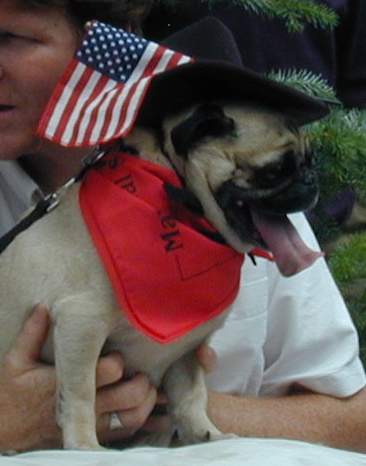
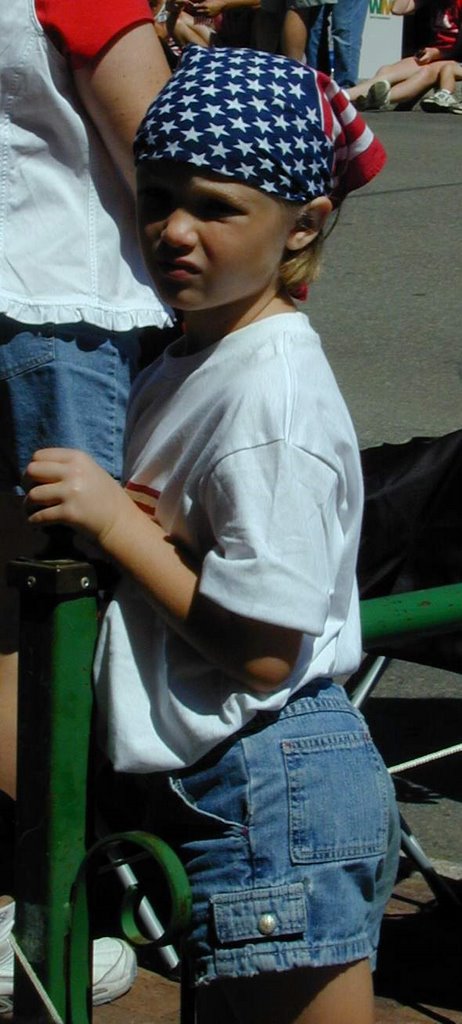
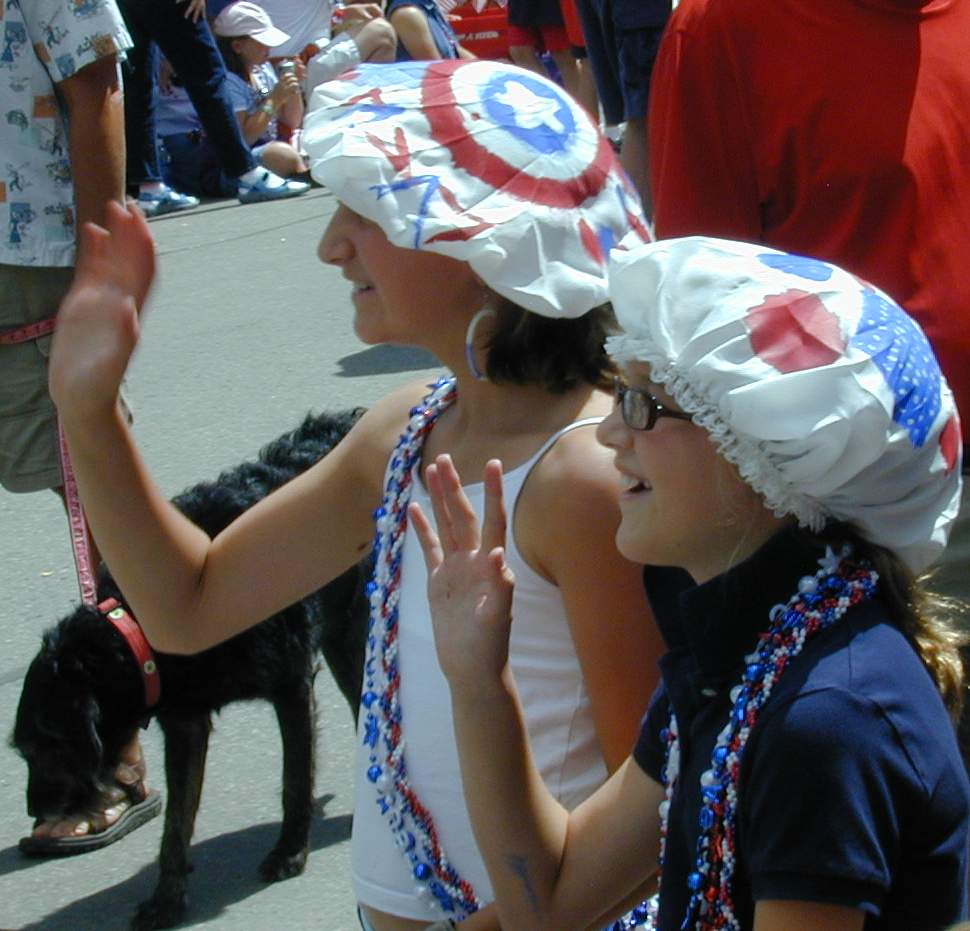
4th of July in Small Town, America

The little town near my writing retreat lets it all hang out for their 4th of July parade.












Thursday, July 20, 2006
Child of Misfortune
"Your pregnancy test is positive."
How many times have I said those words? How many different reactions have I seen? Both uncountable. Some women are unsurprised, prepared, resigned. Some are shocked into tears of happiness or fear. And everything in between.
I'm thinking today of a particular woman who was in that first group. I'll call her Sanja. Sanja was from Another Country, here for graduate school. She had fallen for a young American man. They were having sex and had slipped up with their protection. Her period was late. She was pretty sure she was pregnant and had already decided what to do. Although she cared for her lover, she wasn't sure he was It for the long term. He was an unfocused young man, a heavy pot smoker who had since dropped out of school, and she was a scientist in the making, with years of schooling yet to go. She was concerned about the effect of marijuana on the baby, but mostly she didn't want to have a child until she was in a secure, long-term relationship. She was going to terminate the pregnancy.
So, when I told her the news, she nodded, informed me of her plan, and asked for information. I gave her the name and numbers of the local pregnancy termination resources, counseled her briefly, and sent her on her way. One of the easier such sessions I've had.
Two weeks later she was back. "I couldn't do it, Dr. Spencer."
Okay. "Tell me about it."
"Well, I went to the Clinic and they put that jelly stuff on my stomach, you know? And then they did the scan thing to look. When I heard my baby's heartbeat, I just couldn't go through with it."
WHAT?! She heard the HEARTBEAT?!?!?! At a pre-termination visit?
"It surprises me that you heard that." I tried not to show my shock and outrage.
"I think it was a mistake. They turned it off right away. I don't think I was meant to hear it."
No, I don't think you were. "I'm sorry." What else could I say?
I gave her the prenatal resources this time. She carried the pregnancy to term and gave birth to a healthy girl. Because of the child, she stayed with Pothead, in spite of a deterioration in both his functioning and the relationship. He was useful. He could be home, caring for the baby, while she returned to school to finish her degree. She went back to school, determined to complete her education and become a professional, although her love for her child tugged at her constantly. A year went by. One time she came in I saw bruises on her arm. Pothead was beating her. She refused to take any action, asserting that he never hurt the baby and she needed him, and besides, he was the baby's father. Unfortunately, this wasn't the first time. Nor was it the last.
You can't report an abuser if the abused isn't willing. Unless the abused is a kid, or an elder who is non compos mentis. But an adult who is being beaten has to make the decision themselves to call the cops on the person beating them. It's one of the chronic frustrations of the medical profession.
Sanja wouldn't do it. I tried every approach. Sympathy, challenge, outrage--I even played the baby card. Who wouldn't?
Things escalated, of course, and eventually she did end up calling the cops once or twice. But when the incident cooled down, she continued to stay. She worked hard at her schooling. Baby girl blossomed into a delightful and lovely toddler. Pothead was pothead.
Sanja finished her degree, and I was excited. Now she could leave, finally. But she didn't! She thought her daughter should have a dad, so she stayed with that loser, and moved out of state to get a job. I said goodbye with an ache in my heart, for her and for the child. What kind of a home would it be for the little girl, with a father who abused the mother and no love in sight?
I figured I'd heard the last of Sanja. Then one day about a year later, out of the blue, I received a long-distance call. Over the crackling airwaves, her voice was excited, lighter and stronger than I'd ever heard. I held my breath as I listened.
"I did it, Dr. Spencer! I left! He just got worse and worse so one day I just took the baby and a few things and left when he wasn't home. He doesn't know where we are and we'll never go back. I'm so happy!"
I was thrilled to the bone. "Sanja, I'm so proud of you! Thank you so much for calling me with your happy news!" It had taken her almost five years, but she found the strength.
The first part of this story is discouragingly common. Every medical provider (and many regular folks) knows someone who stayed in an abusive relationship. It's heartbreaking.
But this time, this one glorious time, there was a happy ending.
Sanja and your lucky daughter, wherever you are, I wish you a long life and lasting happiness.
How many times have I said those words? How many different reactions have I seen? Both uncountable. Some women are unsurprised, prepared, resigned. Some are shocked into tears of happiness or fear. And everything in between.
I'm thinking today of a particular woman who was in that first group. I'll call her Sanja. Sanja was from Another Country, here for graduate school. She had fallen for a young American man. They were having sex and had slipped up with their protection. Her period was late. She was pretty sure she was pregnant and had already decided what to do. Although she cared for her lover, she wasn't sure he was It for the long term. He was an unfocused young man, a heavy pot smoker who had since dropped out of school, and she was a scientist in the making, with years of schooling yet to go. She was concerned about the effect of marijuana on the baby, but mostly she didn't want to have a child until she was in a secure, long-term relationship. She was going to terminate the pregnancy.
So, when I told her the news, she nodded, informed me of her plan, and asked for information. I gave her the name and numbers of the local pregnancy termination resources, counseled her briefly, and sent her on her way. One of the easier such sessions I've had.
Two weeks later she was back. "I couldn't do it, Dr. Spencer."
Okay. "Tell me about it."
"Well, I went to the Clinic and they put that jelly stuff on my stomach, you know? And then they did the scan thing to look. When I heard my baby's heartbeat, I just couldn't go through with it."
WHAT?! She heard the HEARTBEAT?!?!?! At a pre-termination visit?
"It surprises me that you heard that." I tried not to show my shock and outrage.
"I think it was a mistake. They turned it off right away. I don't think I was meant to hear it."
No, I don't think you were. "I'm sorry." What else could I say?
I gave her the prenatal resources this time. She carried the pregnancy to term and gave birth to a healthy girl. Because of the child, she stayed with Pothead, in spite of a deterioration in both his functioning and the relationship. He was useful. He could be home, caring for the baby, while she returned to school to finish her degree. She went back to school, determined to complete her education and become a professional, although her love for her child tugged at her constantly. A year went by. One time she came in I saw bruises on her arm. Pothead was beating her. She refused to take any action, asserting that he never hurt the baby and she needed him, and besides, he was the baby's father. Unfortunately, this wasn't the first time. Nor was it the last.
You can't report an abuser if the abused isn't willing. Unless the abused is a kid, or an elder who is non compos mentis. But an adult who is being beaten has to make the decision themselves to call the cops on the person beating them. It's one of the chronic frustrations of the medical profession.
Sanja wouldn't do it. I tried every approach. Sympathy, challenge, outrage--I even played the baby card. Who wouldn't?
Things escalated, of course, and eventually she did end up calling the cops once or twice. But when the incident cooled down, she continued to stay. She worked hard at her schooling. Baby girl blossomed into a delightful and lovely toddler. Pothead was pothead.
Sanja finished her degree, and I was excited. Now she could leave, finally. But she didn't! She thought her daughter should have a dad, so she stayed with that loser, and moved out of state to get a job. I said goodbye with an ache in my heart, for her and for the child. What kind of a home would it be for the little girl, with a father who abused the mother and no love in sight?
I figured I'd heard the last of Sanja. Then one day about a year later, out of the blue, I received a long-distance call. Over the crackling airwaves, her voice was excited, lighter and stronger than I'd ever heard. I held my breath as I listened.
"I did it, Dr. Spencer! I left! He just got worse and worse so one day I just took the baby and a few things and left when he wasn't home. He doesn't know where we are and we'll never go back. I'm so happy!"
I was thrilled to the bone. "Sanja, I'm so proud of you! Thank you so much for calling me with your happy news!" It had taken her almost five years, but she found the strength.
The first part of this story is discouragingly common. Every medical provider (and many regular folks) knows someone who stayed in an abusive relationship. It's heartbreaking.
But this time, this one glorious time, there was a happy ending.
Sanja and your lucky daughter, wherever you are, I wish you a long life and lasting happiness.
Wednesday, July 19, 2006
Calling Again
This is an addendum to the Call for Stories post. If any of you followed the link to the book blog, you found a lo-o-o-ng list of chapters and summaries. In case that was as overwhelming to you as it is to me (!), here are some suggested ideas. If you have anything to share about any of this, please leave a comment here or email me at pspencer@unm.edu.
We’re seeking true stories from people in midlife, for possible inclusion in our book. What kind of stories? See our 50 suggested themes below. Don’t just tell us what happened; TELL US HOW THE EXPERIENCE CHANGED YOU, as well as any advice you may have for people facing similar situations! Stories should be as brief as possible (and we reserve the right to edit as needed for length and clarity). Don’t worry if it’s well-written; just tell the story in your own words. For more complete information about our book's contents, see the series of posts titled "Call for Stories."
Email your input to pspencer@unm.edu. Please include your real name, your (real!) age, and the first name (real or not) that you’d like us to use for you in our book and/or blog. DEADLINE:August 31, 2006 (though sooner is definitely better!)
We’re seeking true stories from people in midlife, for possible inclusion in our book. What kind of stories? See our 50 suggested themes below. Don’t just tell us what happened; TELL US HOW THE EXPERIENCE CHANGED YOU, as well as any advice you may have for people facing similar situations! Stories should be as brief as possible (and we reserve the right to edit as needed for length and clarity). Don’t worry if it’s well-written; just tell the story in your own words. For more complete information about our book's contents, see the series of posts titled "Call for Stories."
Email your input to pspencer@unm.edu. Please include your real name, your (real!) age, and the first name (real or not) that you’d like us to use for you in our book and/or blog. DEADLINE:
Fifty Suggested Story Ideas (feel free to think up your own)
1. The Classic Midlife Crisis (whatever that means to you)
2. Near-death experience
3. Mentoring a young person (on the job or Big Brother/Big Sister)
4. “I’m a foster parent"
5. Caring for elderly parents
6. “I became a parent for the first time in midlife”
7. Hypnosis or self-hypnosis for lifestyle change
8. "I got Rolfed!"
9. first-hand experience with the Alexander Method
10. Confronting addiction
11. Junk-food junkie no more!
12. “I lost the weight and kept it off”
13. Reducing dependence on Rx meds through diet, exercise, and/or other natural means
14. Loving your body after disfiguring accident or surgery
15. “I ‘feng-shui’ed my home! (garden, work place, whatever)”
16. “How journaling changed my life”
17. FINANCIAL PLANNER! Help!! What’s your advice for the midlifer who never got around to saving for retirement (yet)??
18. Radical change in your belief system
19. "I truly believe that stranger was an Angel, right here on earth!"
20. "Group meditation can change the world -- I've seen it happen!"
21. Lucid dreaming
22. Solving waking-life problems while you sleep
23. Hey Sailor! Tell us what it really means to "go with the flow."
24. Healing trauma -- even years later
25. Chanting and/or drumming for better wellbeing
26. Howling at the moon
27. How do you feed your Muse?
28. Got a totem animal? How'd you meet? Then what happened?
29. "I was the proverbial 'Little Engine Who Could'!"
30. Road Trip! The long strange trip that changed your life.
31. Adventures in colonics!
32. What would you pack in your Midlife Survival Kit?
33. There are worse things in life than getting a hearing aid.
34. Lasik surgery or first pair of bifocals?
35. Pushing the envelope.
36. Are you a Native American who can tell us about the Seventh Generation concept?
37. "I screwed up my courage and made the call!"
38. Life after divorce.
39. PAR-TAY! Tell us of a big 5-0 celebration for the record books.
40. The gift of my heart attack.
41. Postcards from Nirvana (the serious pursuit of enlightenment or the peak pleasure experience, your choice)
42. Are you a "wild and crazy guy" (still crazy after all these years)?
43. "I am so past caring about keeping up with the Joneses!"
44. New romance in midlife
45. Confessions of a misanthrope: or "How I learned to love the entire human race"
46. Riders on the storm: surviving mental illness
47. There've been WAY too many funerals lately!
48. So what do you want on your gravestone?
49. Forsaking food and sleep: the masterpiece that came through you
50."I love to laugh....it's getting worse every year!"
Subscribe to:
Posts (Atom)


